







Identity Governance Best Practices for Modern Enterprises
In today's digital environment, organizations are managing more users, applications, devices, and data than ever before. Employees work remotely, systems operate in the cloud, and business operations rely heavily on fast and secure access to information. As organizations grow, managing who has access to what becomes increasingly complex.
This is where Identity Governance plays a critical role.
Identity Governance is not only a cybersecurity requirement it is a business necessity. It helps organizations ensure that the right individuals have the appropriate access to systems, applications, and sensitive information while reducing operational risk and supporting compliance objectives.
For modern enterprises, effective identity governance creates a balance between security, productivity, and operational efficiency.
At CYBRELI, we help organizations build scalable Identity and Access Management (IAM) strategies designed to strengthen governance, simplify access management, and support long-term digital transformation initiatives.
Below are some of the most important identity governance best practices organizations should consider when modernizing their security and access management programs.
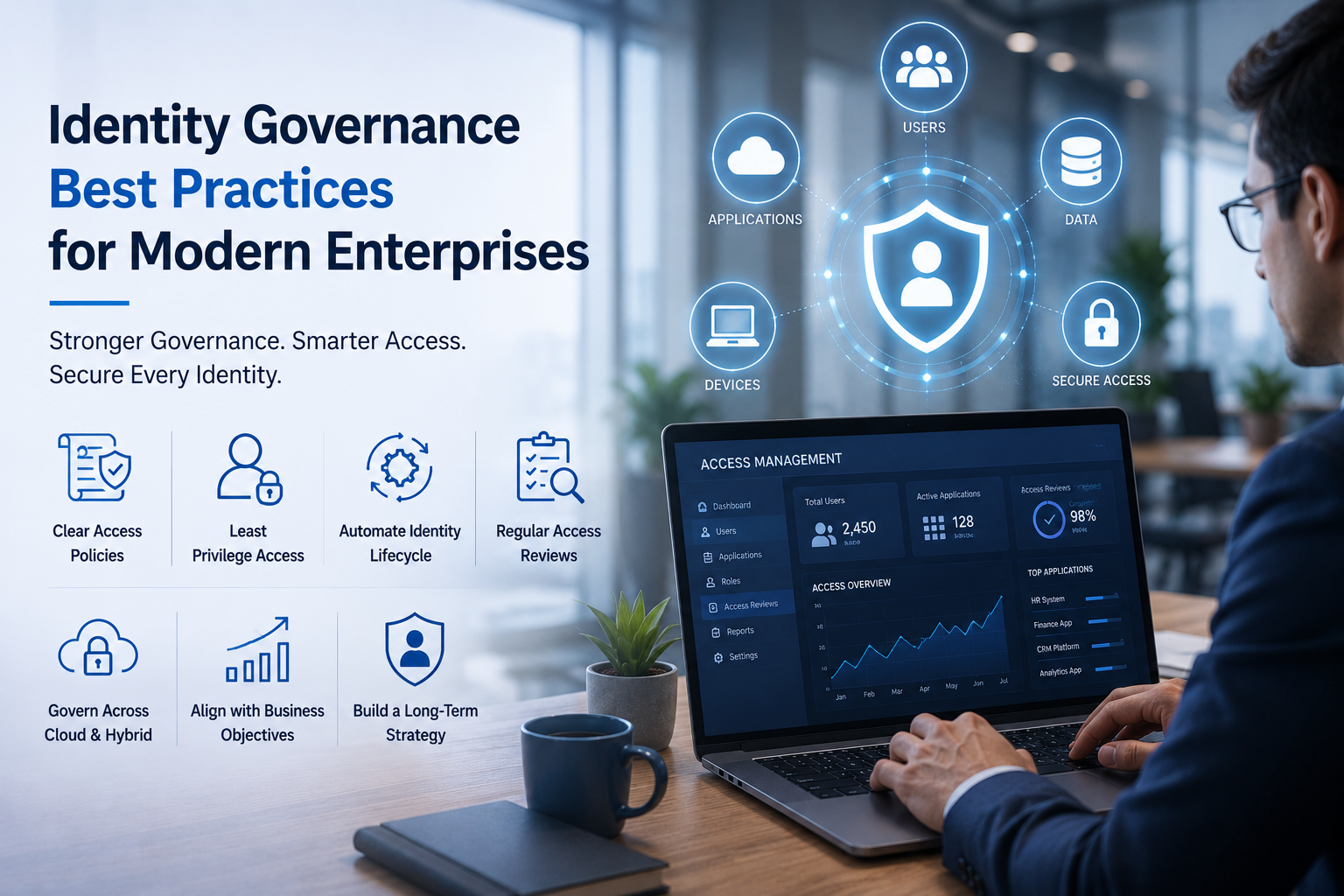
1. Establish Clear Access Policies
One of the most common challenges organizations face is inconsistent access control across departments and systems.
Many businesses accumulate outdated accounts, excessive permissions, and manual approval processes over time. Without clear governance policies, organizations increase their exposure to security risks, compliance gaps, and operational inefficiencies.
Modern enterprises should establish clear and standardized policies that define:
- Who can request access
- Who approves access
- What level of access is appropriate
- How access is monitored and reviewed
Strong governance begins with visibility and accountability. When organizations clearly define access responsibilities, they reduce confusion, improve security oversight, and strengthen operational consistency across the enterprise.
2. Apply the Principle of Least Privilege
Employees should only have access to the systems and information necessary to perform their job responsibilities.
Overprovisioned access remains one of the largest identity-related security risks within organizations. Excessive permissions increase the potential impact of internal misuse, compromised accounts, and accidental data exposure.
Applying the principle of least privilege helps organizations:
- Reduce unnecessary access
- Minimize security exposure
- Improve overall control over sensitive systems and information
As organizations evolve, access rights should continuously adapt to role changes, department transfers, and employment status updates.
Identity governance should never be treated as a one-time activity. It requires ongoing management and regular review.
3. Automate Identity Lifecycle Management
Manual access management processes often create delays, inconsistencies, and security gaps.
Modern organizations should automate identity lifecycle processes such as:
- Employee onboarding
- Role changes
- Transfers
- Offboarding
Automation helps ensure users receive appropriate access quickly while reducing the risk of unauthorized or outdated permissions remaining active after organizational changes occur.
Efficient lifecycle management also improves operational productivity for IT and security teams while creating a better experience for employees and business users.
Organizations that automate identity processes are typically better positioned to scale securely as business operations grow.
4. Conduct Regular Access Reviews
Access reviews are essential for maintaining visibility and accountability across enterprise environments.
Over time, users may accumulate unnecessary permissions due to organizational changes, project assignments, or outdated approval processes. Without regular reviews, organizations can lose visibility into who has access to sensitive systems and whether that access is still appropriate.
Periodic access certifications help organizations:
- Validate user access
- Identify excessive permissions
- Support audit readiness
- Strengthen governance maturity
Access reviews should involve both IT and business stakeholders to ensure decisions align with operational responsibilities and business needs.
5. Strengthen Governance Across Cloud Environments
As organizations continue adopting cloud platforms and hybrid infrastructures, identity has become the new security perimeter.
Cloud applications, remote work environments, and third-party integrations increase the importance of centralized identity governance and consistent access controls.
Organizations should implement governance strategies that provide visibility across:
- Cloud applications
- On-premises systems
- Third-party services
- Hybrid environments
A centralized governance approach helps reduce complexity while improving security consistency across the enterprise. Modern identity governance should support flexibility without sacrificing control.
6. Align Identity Governance with Business Objectives
Identity governance initiatives are most successful when they support broader business priorities.
Security programs should not create unnecessary operational barriers. Instead, governance frameworks should help organizations:
- Improve efficiency
- Support regulatory compliance
- Reduce operational risk
- Enable secure digital transformation
Business leaders, security teams, and technology stakeholders should collaborate closely when designing governance strategies to ensure alignment between security requirements and operational goals.
Effective identity governance is not simply about restricting access it is about enabling secure business operations.
7. Build a Long-Term Governance Strategy
Identity governance maturity does not happen overnight.
Organizations should approach governance as an ongoing strategic initiative rather than a short-term compliance project. As technology environments evolve, governance models must continuously adapt to new applications, workforce changes, regulatory expectations, and cybersecurity threats.
Successful organizations invest in scalable governance frameworks that support long-term growth, operational resilience, and enterprise security modernization.
A proactive governance strategy creates a stronger foundation for future digital initiatives while helping organizations respond more effectively to evolving risks.
Final Thoughts
Identity governance has become a foundational component of modern enterprise security. Organizations that invest in strong governance practices are better positioned to reduce risk, improve operational efficiency, strengthen compliance readiness, and support secure digital transformation initiatives.
As digital ecosystems continue to expand, identity will remain at the center of cybersecurity strategy.
At CYBRELI, we help organizations design and implement intelligent Identity and Access Management solutions that strengthen governance, modernize access control, and support secure business growth.